Clear apparatus and technique diagrams for five practical methods that students are expected to recognise, describe or justify.
These are reference diagrams, not substitutes for recalling the method in an exam. On revision pages you may see a diagram link beside a practical technique; opening it brings up the same labelled image without taking you away from the topic.
Measurement
Calibrating and using a pH meter
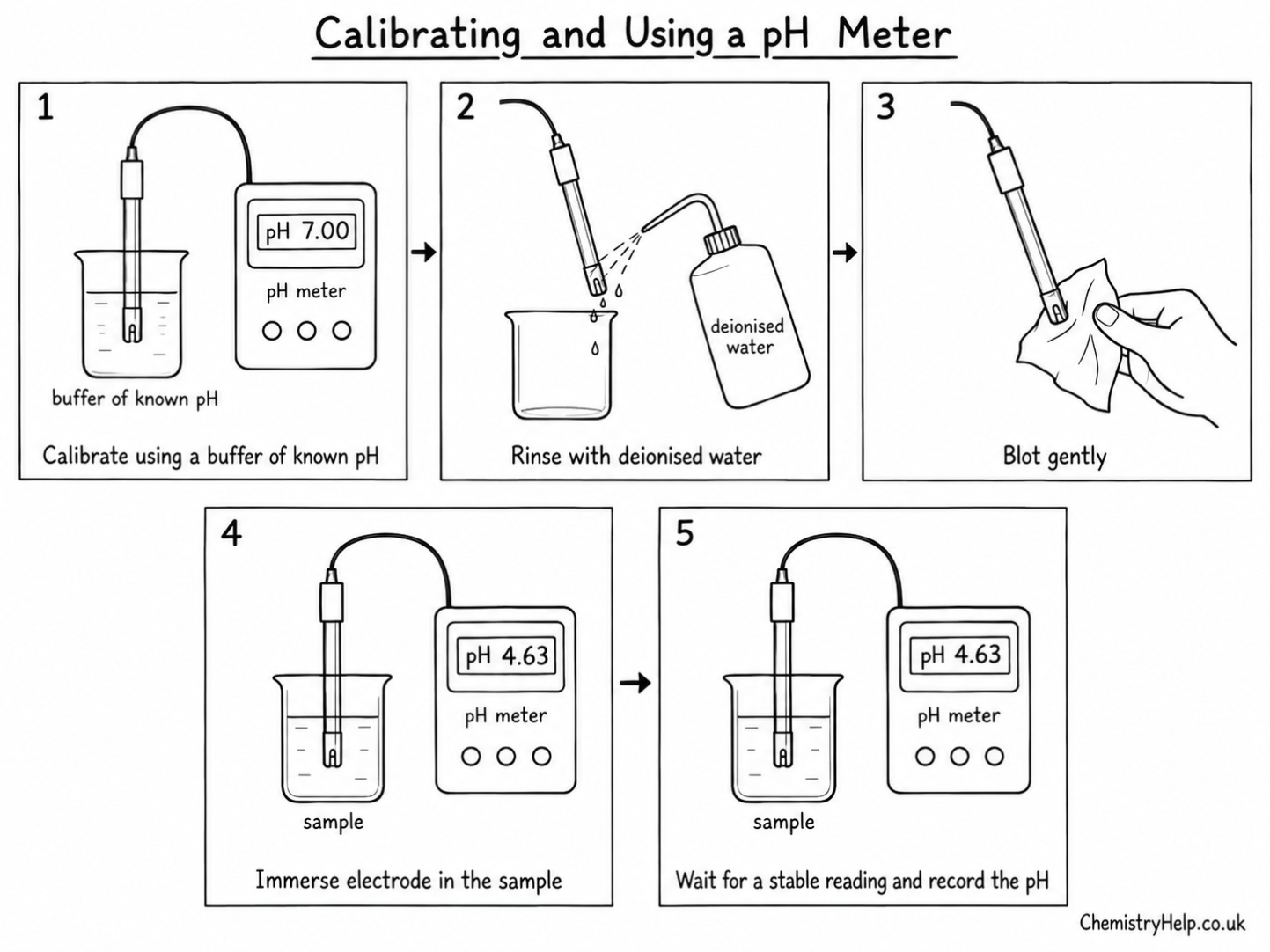
Calibrate before measuring an unknown. Use buffer solution(s) of known pH as required by the meter, rinse the probe with deionised water between solutions, blot it gently and wait for a stable reading in the sample.
Calibrate with buffer solution(s) of known pH as required by the meter, rinse the probe with deionised water, blot gently, then measure the sample and wait for a stable reading.
Rinsing prevents carry-over from one solution to the next. Blotting avoids diluting the next solution with rinse water while reducing the risk of damaging the probe by wiping it hard.
Mass transfer
Weighing by difference
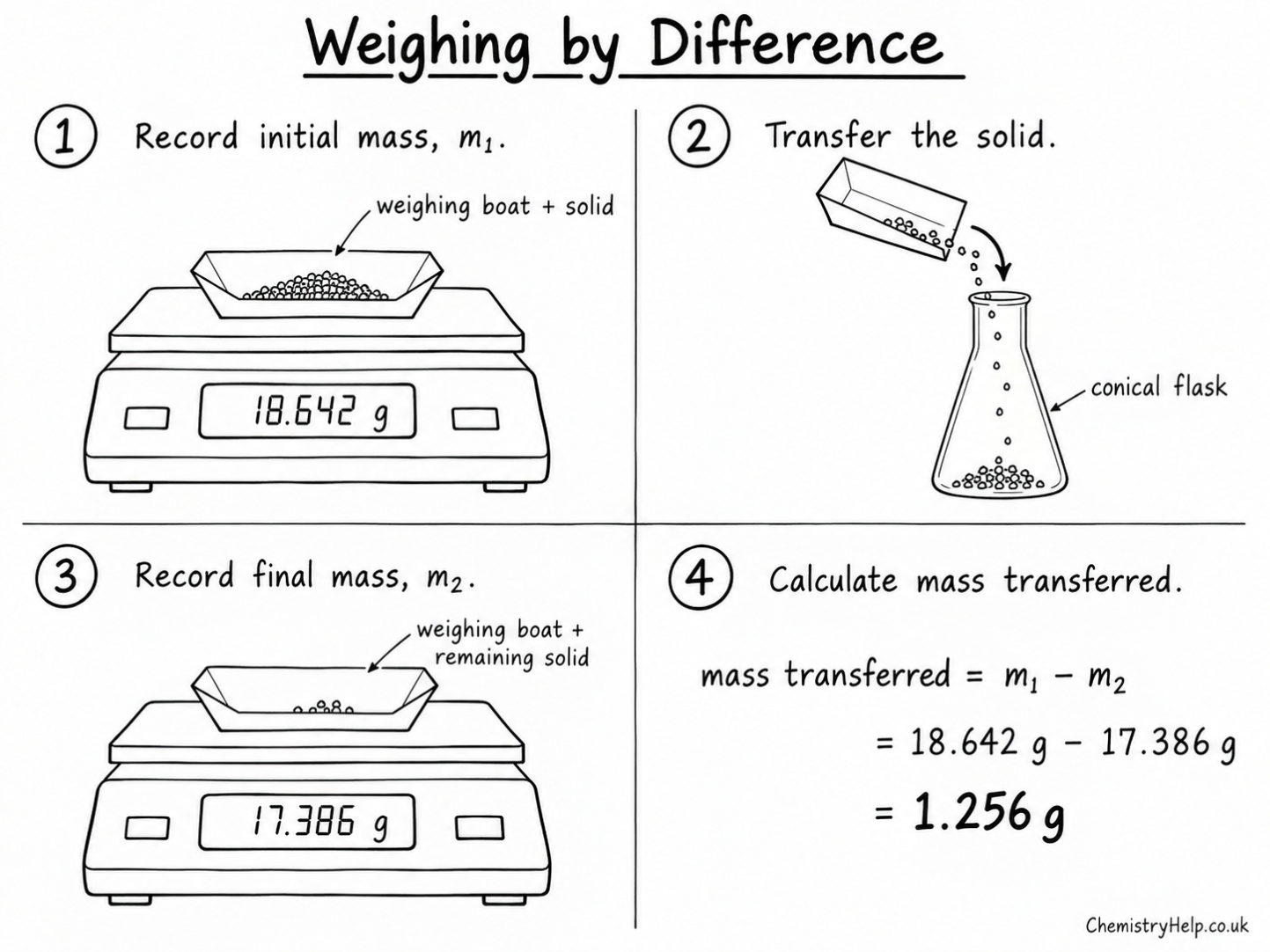
Weigh the container and solid before transfer, transfer the solid, then reweigh the container and anything left in it. The difference is the mass that actually reached the receiving vessel.
The mass actually transferred is the initial mass of the container plus solid minus the final mass of the container plus any solid left behind.
This is useful whenever a little solid may remain in the weighing boat or bottle: the calculation uses the amount transferred, not the amount you hoped to transfer.
Solid purification
Filtration under reduced pressure
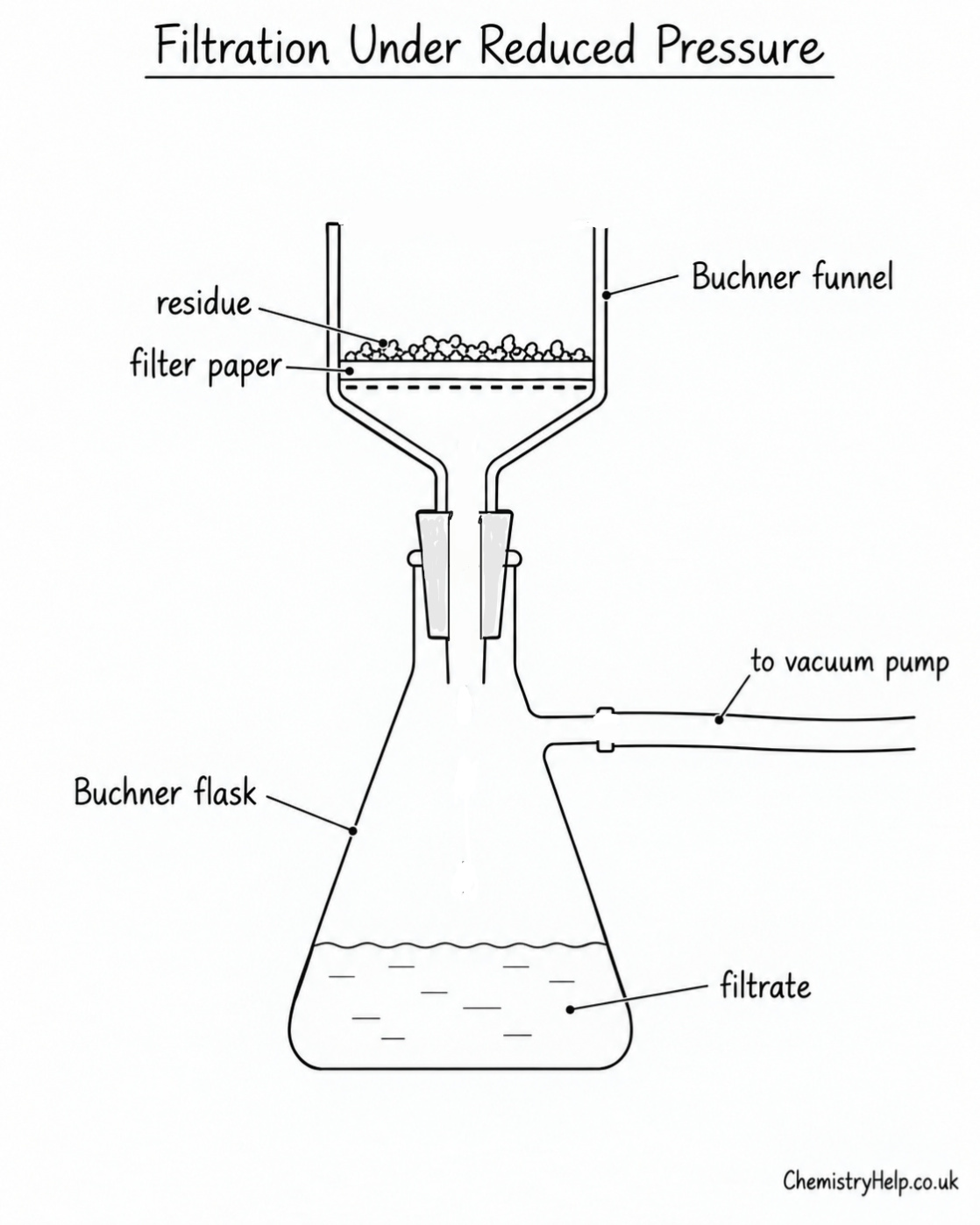
Use a Büchner funnel and side-arm flask connected to a vacuum source. The solid is retained on the filter paper while liquid is drawn rapidly into the flask.
A Büchner funnel and side-arm flask connected to a vacuum source collect the solid on the filter paper while the filtrate is drawn into the flask.
When collecting recrystallised product, wash the crystals with a small amount of cold solvent and keep the suction on to help remove liquid from the solid.
Liquid separation
Simple distillation
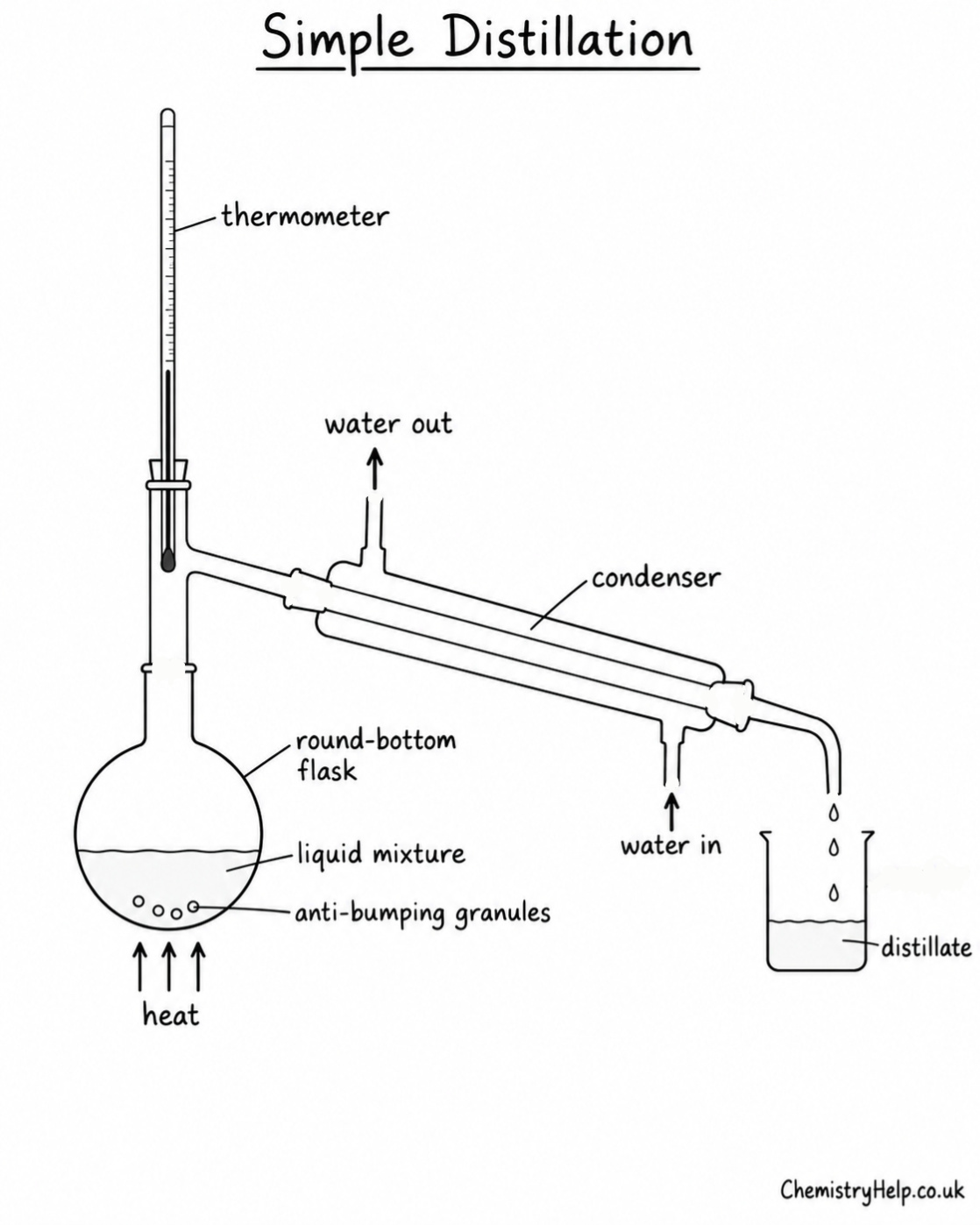
Heat the mixture so the more volatile component forms vapour, pass that vapour through the water-cooled condenser and collect the condensed liquid as distillate.
In simple distillation, vapour leaves the heated flask, passes through the condenser and is collected as distillate. Cooling water enters the condenser at the lower connector and leaves at the upper connector.
Cooling water enters at the lower connector and leaves at the upper connector so the condenser jacket stays full. The thermometer bulb should measure the vapour temperature at the still head.
Organic preparation
Heating under reflux
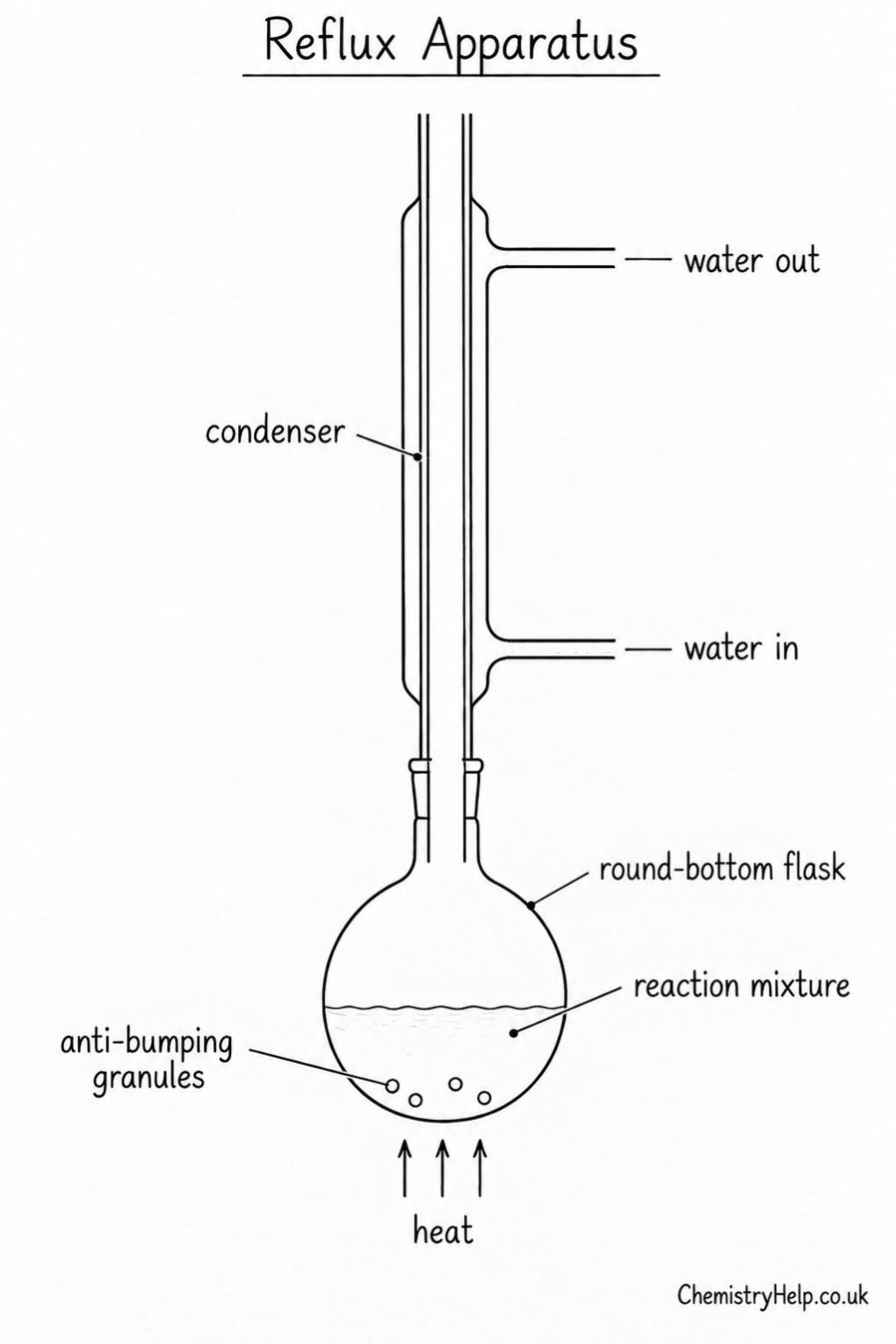
Reflux lets a reaction mixture boil for an extended time without continually losing volatile solvent or reactants. Vapour condenses in the vertical condenser and returns to the reaction flask.
A vertical condenser returns condensed vapour to the reaction flask during reflux. Cooling water enters at the lower connector and leaves at the upper connector, and the heated apparatus is not sealed.
Cooling water enters at the bottom and leaves at the top. Do not seal a heated reflux apparatus: pressure must not be allowed to build up.
Practise the decisions around the apparatus
The practical question sets test why a step is used, what can go wrong and how the method changes with the chemical context.